- Home
- Hunting safari questions answered
FAQ
Hunting safari questions answered
Direct answers to what international hunters ask before booking a South African or Namibian hunting safari.
Twenty questions, answered
Where can I go hunting in South Africa?
Hunting takes place on private game farms and reserves in several South African provinces. Ripley Safaris hunts from Farm a Boekenhoutfontein on the R565 near Rustenburg, in the North West province.
Plains game hunting is concentrated on private land, where the landowner or outfitter controls access, and each province applies its own hunting regulations. Ripley Safaris is based on a privately run reserve near Rustenburg — roughly the bushveld north-west of Johannesburg — and offers guided, fair-chase hunts there. Read more on our South Africa hunting safaris page, or see the lodge and location.
How much does a South African hunting safari cost?
Ripley Safaris’ fixed-price packages are US$5,000 (6 days), US$7,000 (8 days) and US$11,000 (10 days); custom safaris are charged at daily rates from US$350 to US$450 per day.
The package price covers the listed animals, airport transfers, a dedicated professional hunter, accommodation and meals. It does not cover everything: internal flights, shipping and taxidermy, rifle hire and ammunition, VAT, the trophy handling fee and further items are extra. Our hunting safari cost guide lists every inclusion and exclusion, and the packages page compares the three safaris. Final quotes are confirmed in writing.
What animals can I hunt in South Africa?
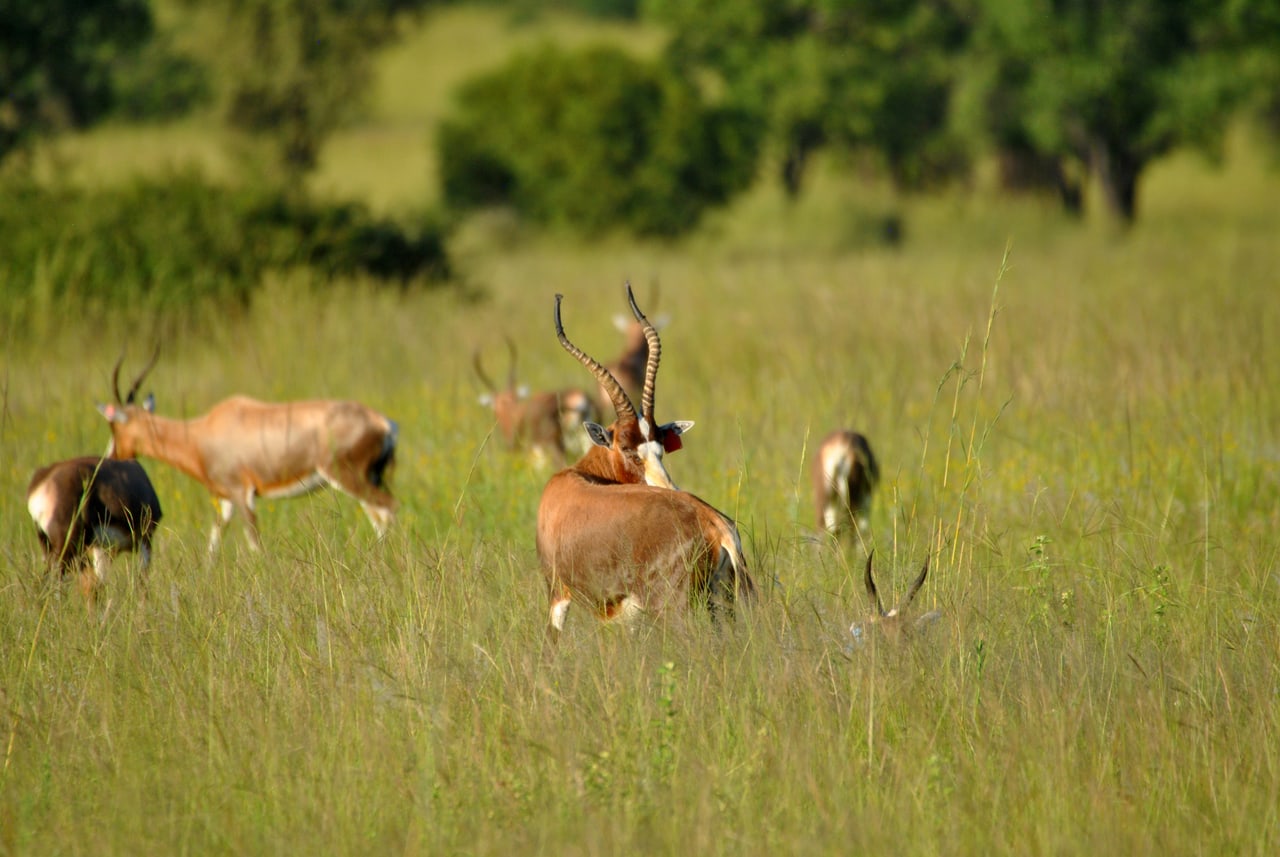
Ripley Safaris lists 20 species, from impala, blesbok and warthog to kudu, nyala, sable and, for experienced hunters, Cape buffalo; availability is confirmed at quote stage.
See the full species directory for each animal, its difficulty rating and which package includes it. Oryx (gemsbok) is listed as a cross-border species hunted in Namibia on request. Species and numbers available vary with the season and the property, so always ask for confirmation before you book.
What is plains game hunting?
Plains game hunting means hunting the non-dangerous antelope and other grazing and browsing species of Africa’s savannas and bushveld, such as impala, kudu, wildebeest and zebra.
It is distinct from dangerous-game hunting (for example Cape buffalo), which uses heavier rifles and different safety practices. Plains game is the usual choice for first-time safari hunters. See our plains game hunting guide.
What is fair-chase hunting?
Fair chase is the ethical pursuit of a wild, free-ranging animal in a way that does not give the hunter an improper advantage over it.
Ripley Safaris offers ethical, fair-chase hunting guided by a professional hunter. Wounded animals are treated as hunted and counted against the package, which keeps the emphasis on a clean, responsible shot. See ethical hunting and conservation.
What does a hunting safari package include?
Each package includes the listed animals plus airport pick-up and drop-off, hunting licence fees, a dedicated professional hunter, a hunting vehicle, lodge accommodation, all land transfers on safari, meals, drinks, wifi and laundry.
Staff such as chefs, trackers and skinners, and a tour of the Paul Kruger Museum on the reserve, are also included. Excluded items include flights, shipping and taxidermy, rifle hire and ammunition, VAT and the trophy handling fee. The complete lists are on the cost guide.
Where is Ripley Safaris located?
Ripley Safaris is based at Farm a Boekenhoutfontein, R565, Rustenburg, North West 0309, South Africa.
You can call +27 71 858 4498, message us on WhatsApp or email ripleysafaris@gmail.com. Details and map link: Contact.
Does Ripley Safaris provide accommodation?
Yes. Guests stay in thatch and stone-built lodging on the reserve, with suites that have private bathrooms, a boma for evening meals and a lounge.
Meals, drinks, wifi and laundry are part of the package price. See photographs and more detail on the hunting lodge near Rustenburg page.
Are professional hunters included?
Yes. Every booking is matched with a dedicated professional hunter, and the package price includes their guiding.
Daily rates differ by hunter-to-guide ratio: US$450 per day for one hunter with one professional hunter, or US$400 per hunter per day for two hunters sharing one professional hunter.
Can I combine hunting in South Africa and Namibia?
Yes, on request. Ripley Safaris arranges cross-border hunting safaris into Namibia alongside a South African hunt.
The Namibian portion is arranged individually and confirmed in your quote. Species such as oryx (gemsbok) are listed for the cross-border option. See hunting safaris in Namibia for how it works and what needs confirming.
What is the best time to visit South Africa for a hunting safari?
Many international hunters choose the cooler, drier months — broadly May to September — when vegetation is thinner and animals gather around water, though hunts can be arranged at other times.
This is general guidance rather than a fixed season; ask us about availability for your dates. Prices on the website do not change by month unless stated in your quote. See travel planning.
How do international hunters travel to South Africa?
Most fly into a major South African airport — usually OR Tambo International near Johannesburg — and are collected by Ripley Safaris, because airport pick-up and drop-off are included.
You will need a valid passport and the correct entry documents for your nationality; check visa requirements with the South African authorities. Internal and international flights are not included in the package. See travel planning for a step-by-step checklist.
What are the firearm import requirements?
Visiting hunters who bring their own rifle need a temporary firearm import permit from the South African Police Service, obtained in advance with the relevant documents; the alternative is to hire a rifle.
Rules, forms and ammunition limits are set by the South African Police Service (SAPS) and your airline, and they can change, so confirm them well before departure. Ripley Safaris offers rifle hire and ammunition (charged separately) for hunters who prefer not to travel with a firearm.
What are the trophy export requirements?
Trophies leaving South Africa need export documentation, and your home country may require its own import permits and health or wildlife paperwork.
Wildlife trade between countries can be controlled under CITES, and imports are regulated by your national authority — for example the US Fish & Wildlife Service for hunters returning to the United States. Shipping and taxidermy are not included in the package price; plan the trophy-handling route before you travel.
Can beginners book a hunting safari?
Yes. The 6-day Beginners Safari (US$5,000) is designed as a gentle introduction to fair-chase hunting, and you can bring a friend or loved one.
It lists one impala, one blesbok, one warthog and one wildebeest. Your professional hunter guides every step, including shot placement. See the Beginners Safari.
Can I arrange a custom hunting itinerary?
Yes. If the fixed packages do not suit you, a custom safari is charged by the day and built around the species you want most.
Tell us your target species, dates and group size on the enquiry form. Fishing, videography and bow-hunting enquiries are also welcome, subject to confirmation of availability.
What should I budget for a hunting safari?
Budget for the package or daily rate, trophy fees (if on a custom safari), flights, shipping and taxidermy, rifle hire and ammunition, VAT, the trophy handling fee, extra drinks and gratuities.
Our cost guide sets out each category. Ask for a written quote that lists every item so there are no surprises.
What is the difference between daily rates and trophy fees?
The daily rate pays for your time on the reserve — professional hunter, lodging, meals and vehicle — while a trophy fee is a separate charge for each animal taken.
Fixed packages bundle the listed animals into one price. On a custom safari you pay the daily rate plus a trophy fee for each animal. Trophy fees are quoted per species on request. Any animal wounded and found or lost is considered hunted and the full fee applies.
Can non-hunting family members accompany hunters?
Yes. Non-hunters (observers) are welcome at US$350 per day.
Observers share the lodge, meals and surroundings, including the Paul Kruger Museum on the reserve. Tell us about your group when you enquire.
How do I request a hunting safari quotation?
Send an enquiry through the form on our contact page, message +27 71 858 4498 on WhatsApp, or email ripleysafaris@gmail.com with your dates, group size and target species.
We reply with a tailored quote. Request a quote or open WhatsApp.
Still have a question?
Message us on WhatsApp or send an enquiry — we reply with details tailored to your trip.